Best Stamped Concrete Patio Designs for Perrysburg Homes
Choosing a stamped concrete patio in Perrysburg is not just about picking a pattern from a sample board. The best patios are designed around the home itself: its brick, siding, stonework, roof colors, backyard layout, landscaping, and the way the family plans to use the space.
That matters in Perrysburg because local homes cover a wide range of architectural styles. You may be working with a traditional brick home, an older property near the historic areas of town, or a newer home with larger outdoor living areas and cleaner architectural lines.
Stamped concrete gives you enough flexibility to work with all of them. The key is knowing when to use texture, where to add color, how much pattern is enough, and which details will still look appropriate years from now.
If you are beginning to plan your project, Nexus Concrete Group's stamped concrete patios in Perrysburg service page is a good place to see how decorative concrete can be incorporated into a complete outdoor living space.
Popular Stamped Concrete Patio Designs for Perrysburg Homes
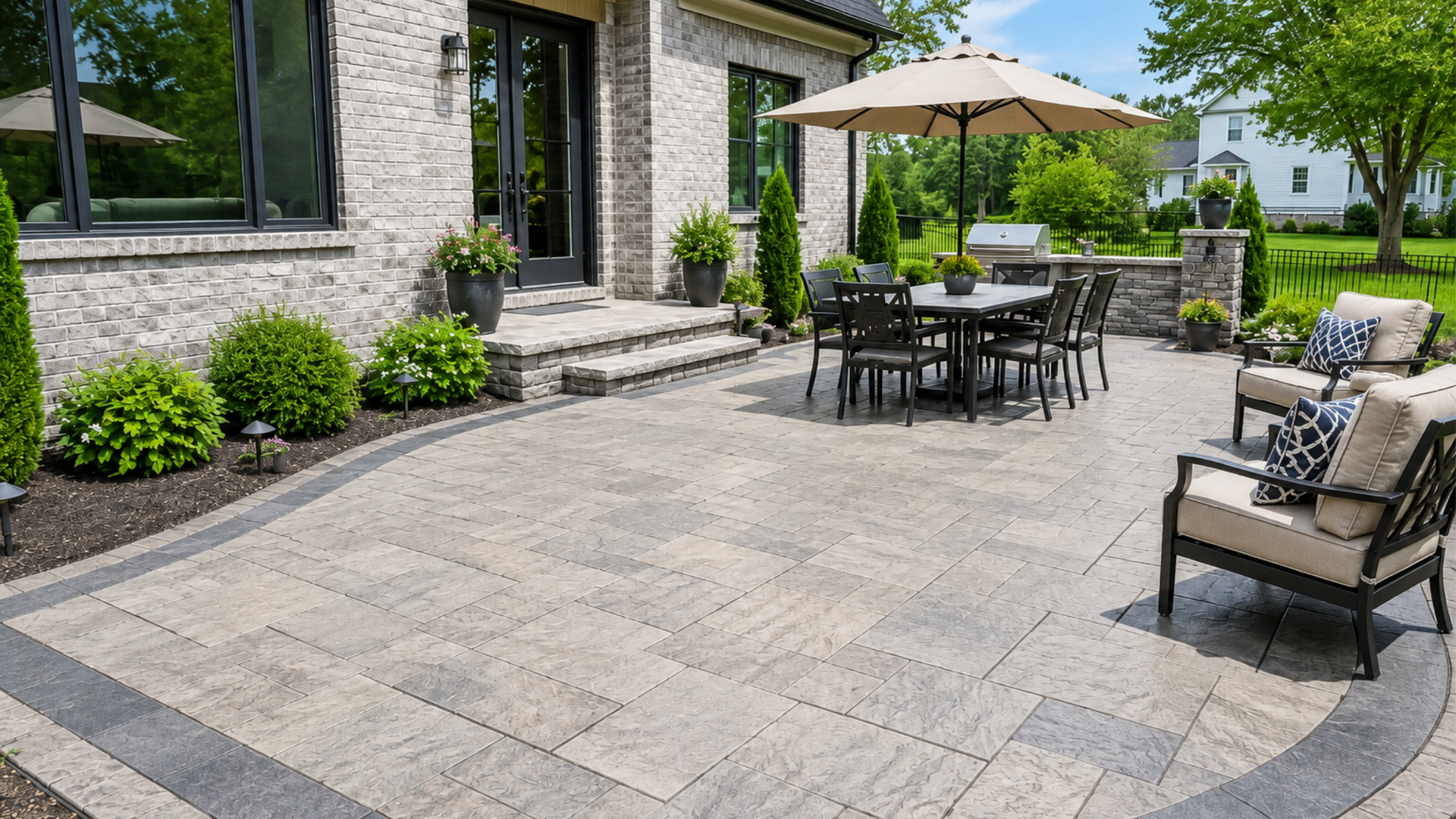
There is no single pattern that works for every property. A pattern that looks right beside a traditional brick home can feel too busy beside a modern home, while an understated texture may disappear in a larger backyard.
Here is a quick way to compare some of the strongest options.
| Patio Design | Overall Look | Works Well With | Design Complexity |
|---|---|---|---|
| Ashlar slate | Structured natural stone | Traditional, transitional and newer homes | Moderate |
| Seamless / Roman slate | Subtle stone texture | Modern and upscale homes | Lower |
| Random flagstone | Informal natural stone | Traditional and landscape-heavy yards | Moderate |
| Wood plank | Warm, rustic texture | Farmhouse and outdoor living designs | Moderate to high |
| Brick accents | Classic and architectural | Brick and historic-inspired homes | Moderate |
| Two-tone border | Defined and custom | Most architectural styles | Moderate |
| Large-format slate | Clean and refined | Contemporary and estate-style homes | Moderate |
1. Ashlar Slate for a Classic, Structured Patio
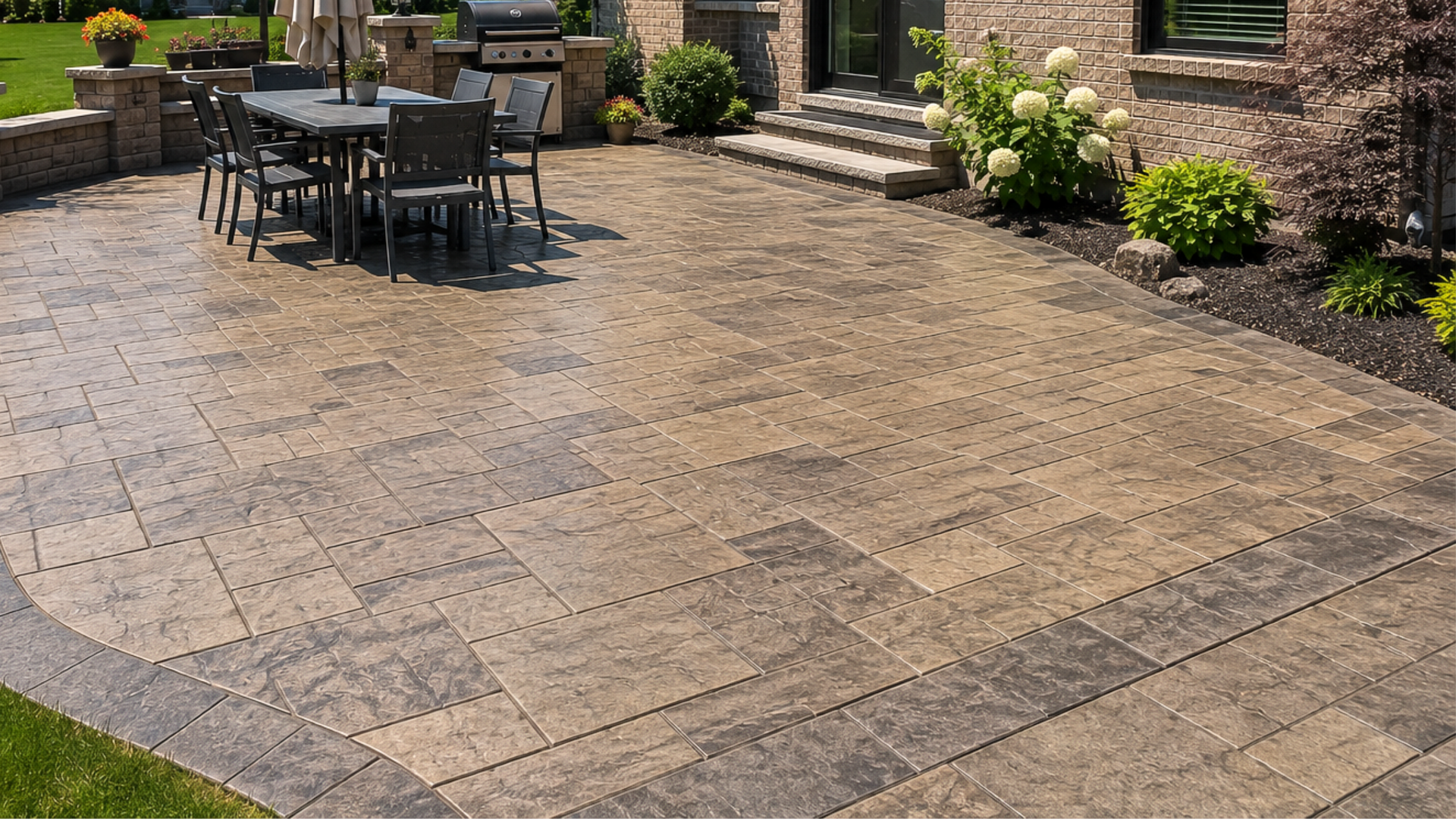
Ashlar slate is one of the most versatile stamped concrete patterns because it combines the look of natural stone with an organized layout.
The pattern typically uses rectangular and square shapes in different sizes. That variation keeps the patio from looking like tile, but the straight lines still create a polished appearance.
For a Perrysburg home with brick, stone veneer, traditional siding, or transitional architecture, Ashlar slate is often an easy pattern to coordinate.
The color does not need to be dramatic. Medium gray, warm gray, sandstone, or muted brown can provide enough variation to show the texture without competing with the house.
A darker release or accent color can then settle into the stamped texture and create more depth.
Ashlar patterns are also among the established patio options used to imitate cut slate and natural stone.
2. Seamless or Roman Slate for a More Understated Look
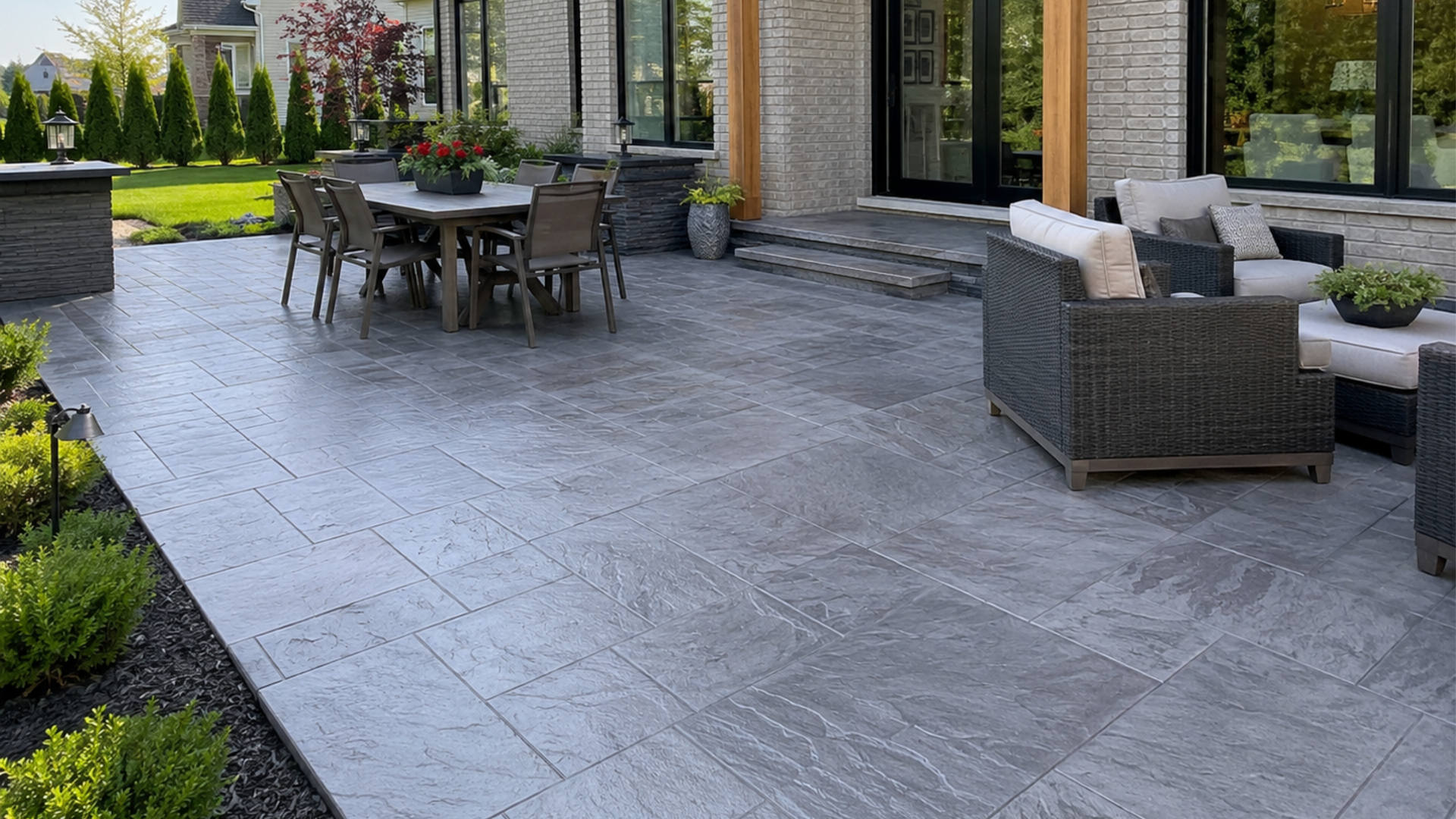
Not every decorative patio needs obvious joints and stone shapes.
A seamless stone or Roman slate texture creates variation across the surface without a strong repeating pattern. From a distance, the patio looks quieter and more continuous. Up close, the texture gives the concrete the character of natural stone.
This works especially well when the home already has several strong materials, such as brick, stone veneer, dark siding, elaborate landscaping, or a detailed outdoor kitchen.
Instead of introducing another competing pattern, the concrete becomes a supporting surface.
It is also a strong choice for larger patios because the subtle texture does not become overwhelming across a broad area.
3. Random Stone or Flagstone for a Natural Backyard
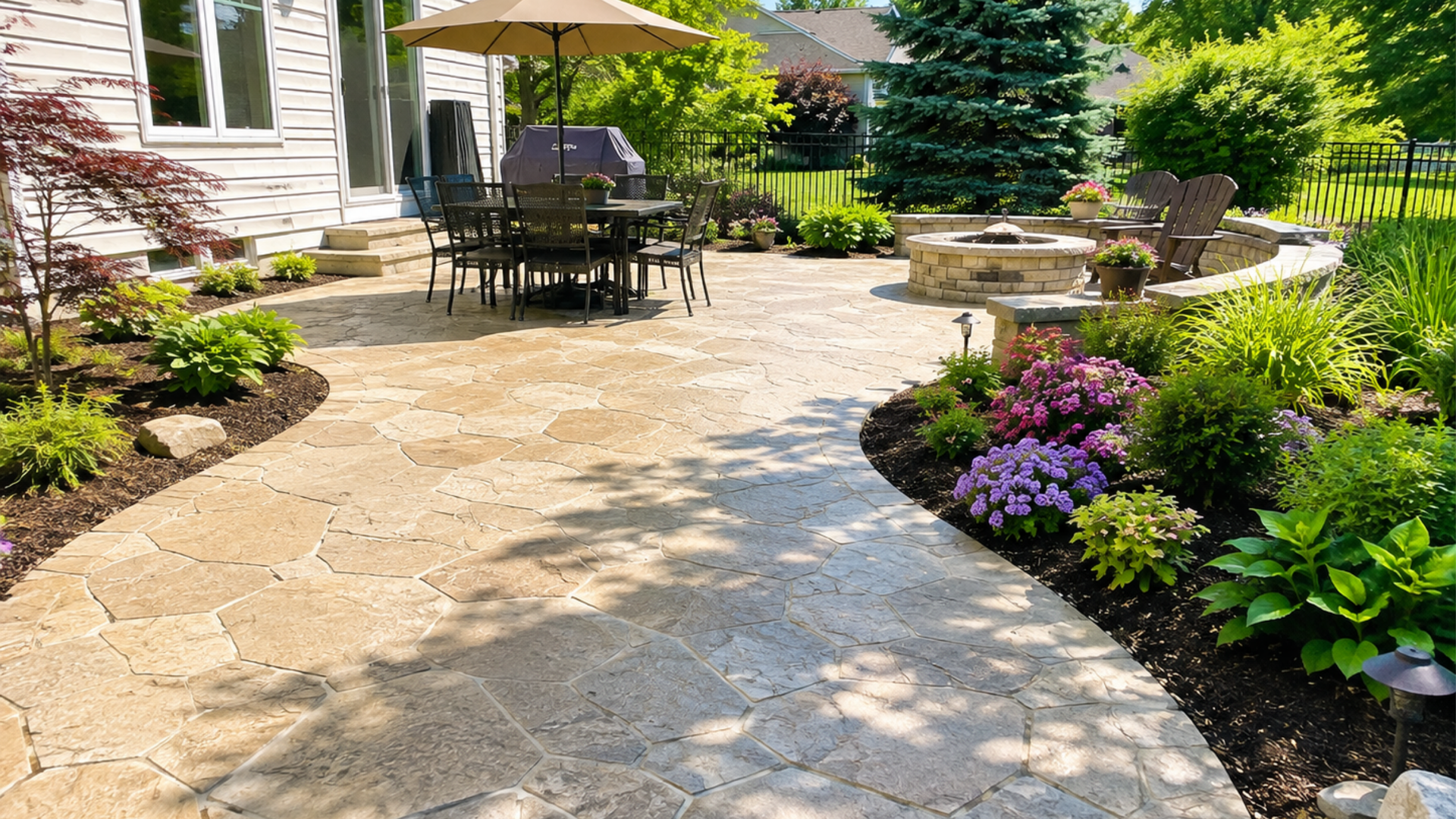
Random stone patterns work well when the goal is to make the patio feel connected to the landscape rather than highly structured.
Irregular stone shapes can complement planting beds, mature trees, natural stone features, fire pits, and curved patio layouts.
The design works particularly well on properties where the backyard has a softer, more established feel.
Color selection becomes important here. Too many contrasting colors can make stamped flagstone look artificial. A restrained palette usually gives a more convincing result.
Consider one main concrete color with a slightly darker release or accent tone rather than trying to make every stamped “stone” a different color.
4. Wood-Plank Stamped Concrete
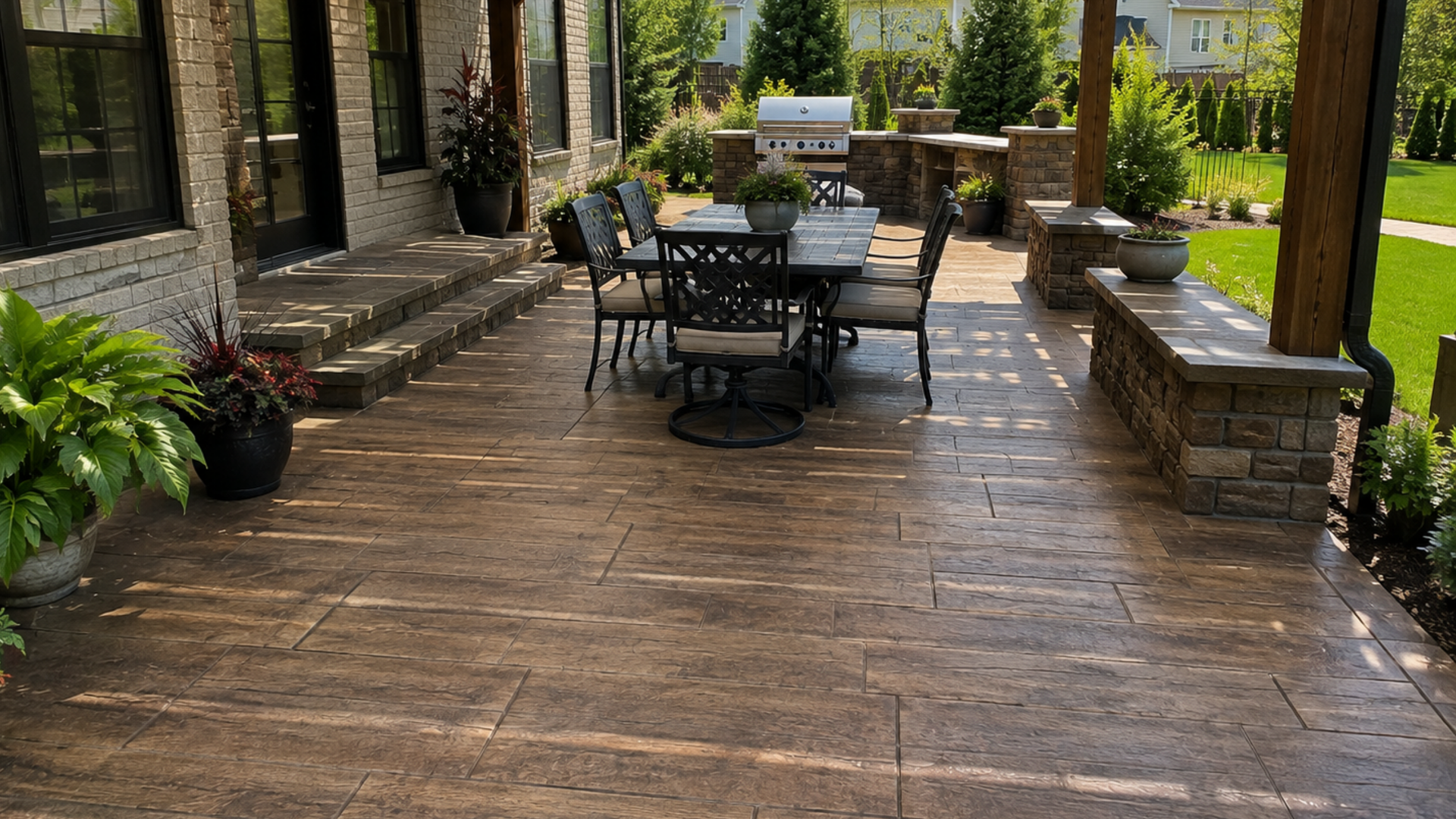
Wood plank stamping gives homeowners the visual warmth of a wood surface while keeping the patio itself concrete.
Long plank patterns can work especially well with modern farmhouse architecture, covered patios, pergolas, outdoor kitchens, and properties with wood accents elsewhere in the exterior design.
The pattern is more noticeable than seamless slate, so the surrounding materials should be considered carefully.
For example, a house with warm wood beams may pair well with a medium brown or weathered gray plank finish. A home with cooler exterior colors may look better with a gray-brown tone rather than a strong red or orange wood color.
Wood-plank stamped concrete can also create visual direction. Running the pattern toward a fireplace, outdoor kitchen, or backyard view can make the patio layout feel more intentional.
5. Brick Patterns and Brick Accent Borders
Perrysburg's historic character makes brick-inspired details worth considering, particularly around traditional homes.
Historic Perrysburg includes architectural examples ranging from Greek Revival and Italianate to Gothic Revival and Queen Anne homes.
That does not mean homeowners should copy historic materials exactly. A better approach is often to borrow a familiar design element.
For example, rather than stamping an entire large patio in a small brick pattern, you could use a stone-textured main field with a stamped brick border.
The border can visually connect the patio to an existing brick exterior while keeping the main surface less busy.
If your property is located within a designated historic area or the project affects regulated exterior features, check applicable requirements with Perrysburg Planning & Zoning before construction. The city administers zoning reviews and Historic Landmarks Commission processes.
6. A Two-Tone Patio With a Decorative Border
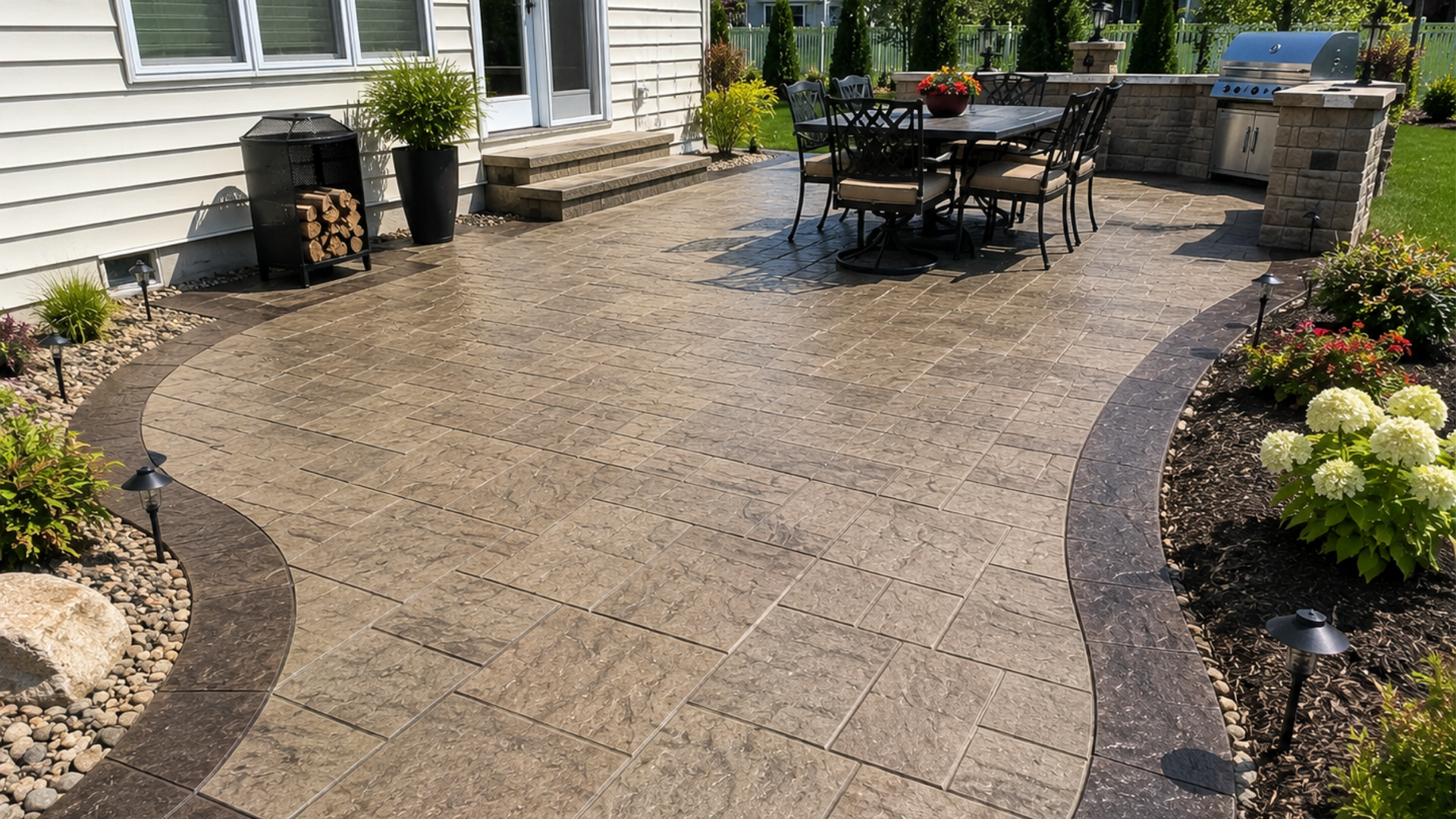
One of the easiest ways to make stamped concrete look more customized is to separate the main patio from its border.
For example:
- warm gray Ashlar slate with a charcoal border
- light sandstone with a medium brown border
- muted slate gray with a darker seamless-texture edge
A border can help define the patio without adding another complicated pattern across the entire surface.
It can also emphasize curves, separate an outdoor dining area, frame steps, or tie the patio into another decorative surface on the property.
If your project includes a driveway as well, similar colors or border details can help connect the backyard and front of the property. Nexus also provides decorative concrete driveways for homeowners looking for a more consistent exterior design.
7. Large-Format Slate for Newer and Contemporary Homes
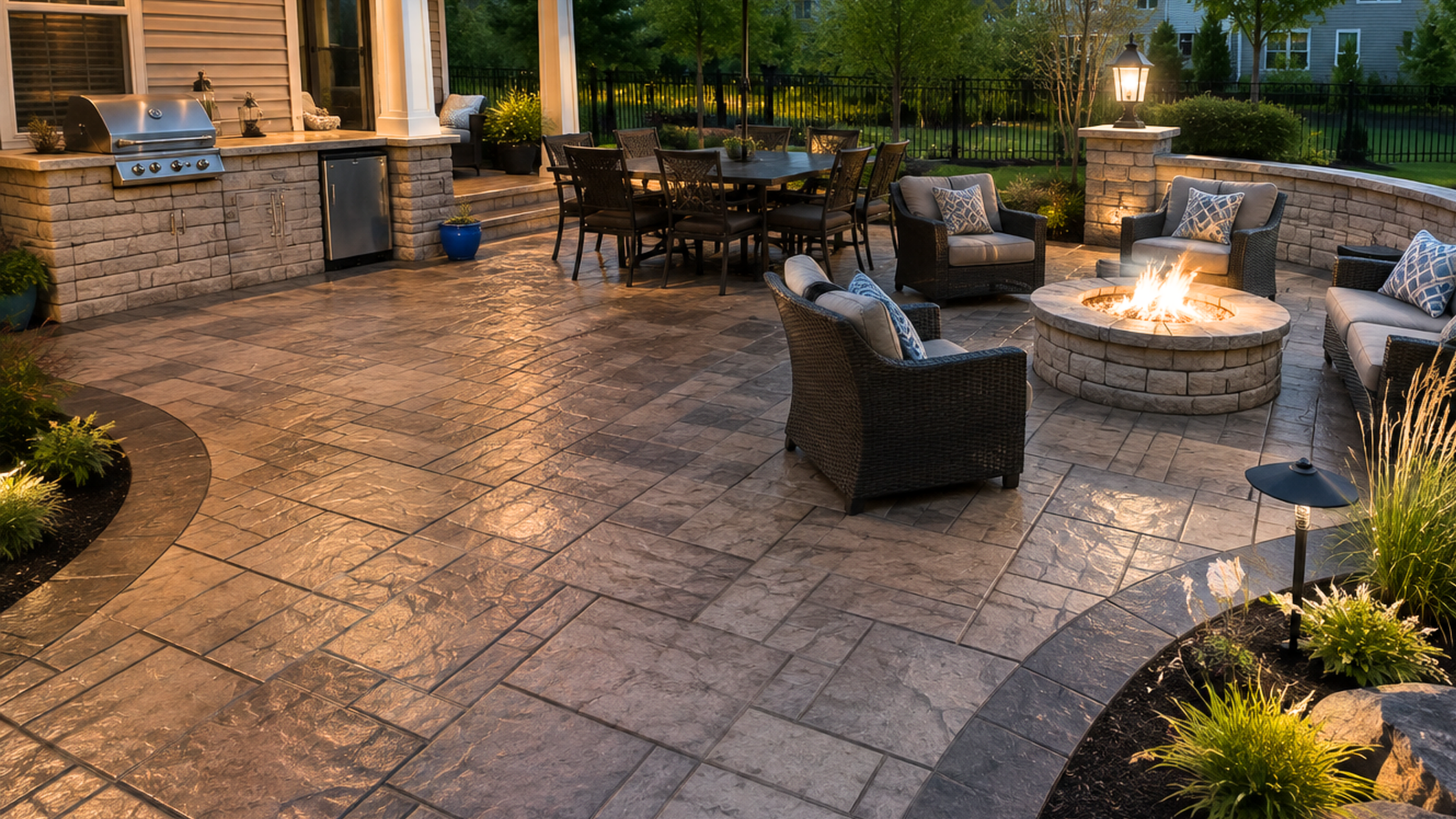
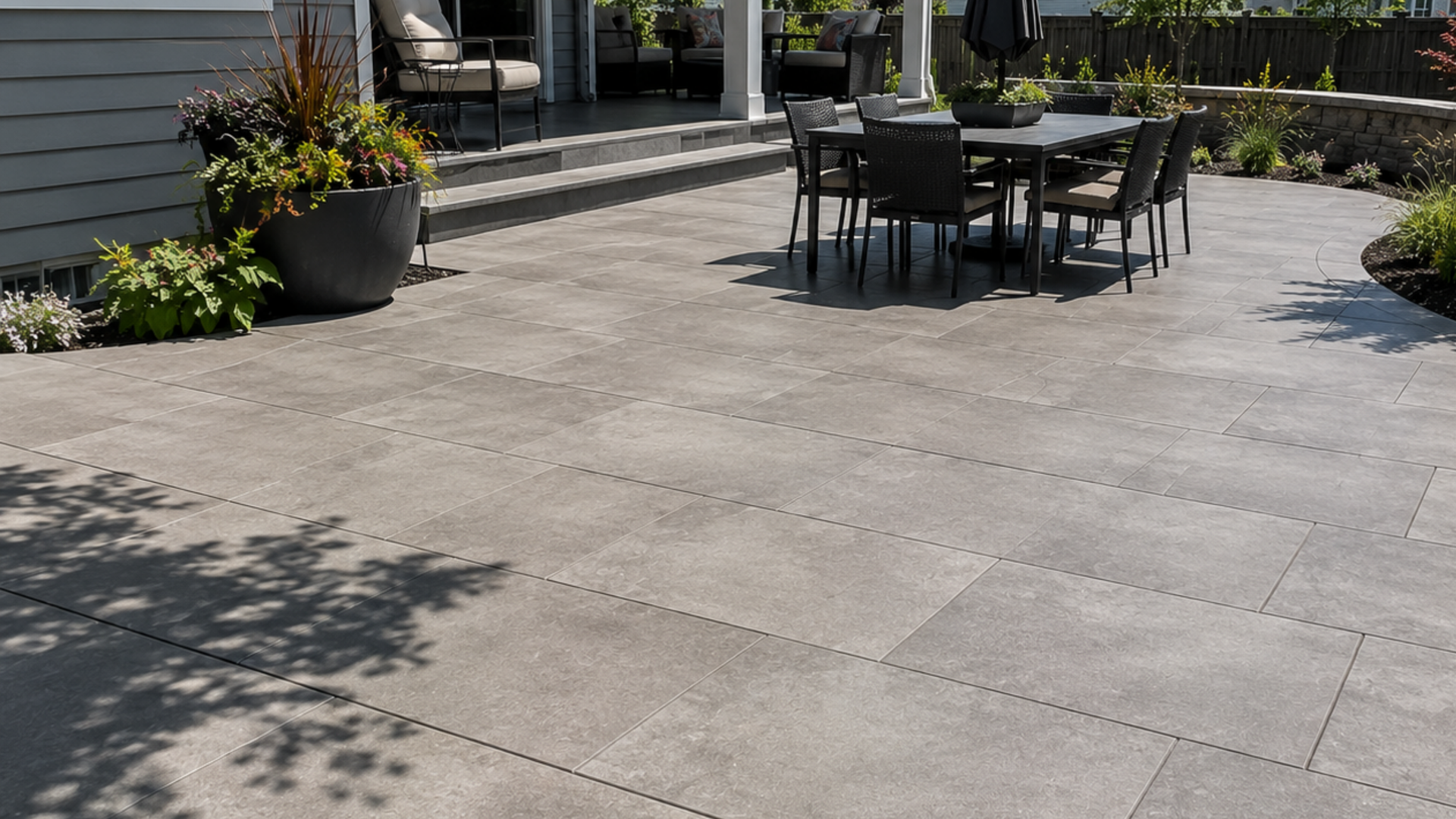
For newer Perrysburg homes, simpler stamped patterns often create a more current appearance.
Large rectangular stone shapes, subtle slate textures, restrained colors, and clean borders work well with homes that already have strong horizontal or vertical architectural lines.
The goal is not to make concrete look overly decorative.
Instead, the patio becomes part of the architecture.
Large-format patterns can be especially effective on expansive patios because they stay proportional to the size of the space. Small, heavily detailed patterns may look crowded across hundreds of square feet.
Keep the color palette simple as well. Gray, greige, limestone, taupe, and charcoal accents can provide visual depth without making the patio the loudest part of the backyard.
How to Match the Patio to Your Perrysburg Home
Choosing the pattern first is a common mistake.
Start with the house.
Look at the permanent materials you are unlikely to change soon:
- exterior brick or stone
- siding color
- roof tone
- trim
- porch or deck materials
- retaining walls
- existing walkways
- pool coping
Then select a patio finish that complements those elements.
You do not need an exact color match. In fact, matching everything too closely can make the exterior look flat.
Instead, look for related undertones.
A warm brick home might work well with taupe, sandstone, muted brown, or warm gray concrete. Cooler siding and stone combinations may pair better with slate, charcoal, or cooler gray.
The same principle applies to pattern scale.
Detailed traditional architecture can support more texture. Cleaner modern architecture usually benefits from fewer competing patterns.
This is where working with an experienced decorative concrete contractor becomes valuable. Samples should be viewed alongside the actual property whenever possible rather than selected in isolation.
A Beautiful Patio Still Has to Work in Northwest Ohio
Pattern and color get most of the attention, but they are only the visible part of a stamped concrete patio.
What happens underneath the concrete has a major effect on long-term performance.
Wood County contains varied soils, including soil profiles with clay and clay-loam layers, which is one reason site conditions should be evaluated rather than assuming every backyard requires identical preparation.
A patio contractor should consider excavation, subgrade condition, the compacted stone base, drainage, finished elevation, and how water will move away from the home.
Northwest Ohio's freezing weather adds another consideration. Properly designed exterior concrete mixtures commonly use entrained air because microscopic air spaces give freezing water room to expand and improve freeze-thaw durability. Both the American Cement Association and concrete industry guidance recognize air entrainment as an important durability measure for concrete exposed to freezing conditions.
Control joints matter too.
Stamped concrete is still concrete, which means it will naturally shrink and move. Joints are used to encourage cracking to occur at planned locations rather than randomly across the slab.
On decorative work, good planning also considers how those joints interact with the stamped pattern so the finished patio looks intentional.
This construction detail is one of the main differences between choosing a stamped pattern and actually building a durable stamped patio.
What Makes One Stamped Patio More Expensive Than Another?
For a design-focused article, a single per-square-foot number can be misleading.
Two patios of the same size can require very different amounts of work.
The main cost drivers include:
| Cost Factor | Why It Changes the Project |
|---|---|
| Patio size | More concrete, reinforcement, labor and finishing |
| Backyard access | Limited access can increase excavation and placement labor |
| Existing patio removal | Demolition and disposal add work before construction starts |
| Curves and custom shapes | More forming and finishing time |
| Stamp complexity | Detailed patterns require additional labor and timing |
| Multiple colors | Adds materials and decorative finishing steps |
| Decorative borders | Requires additional layout and detailing |
| Steps or elevation changes | Adds forming and design complexity |
| Site drainage | Corrective grading or drainage work may be needed |
| Outdoor features | Fire pits, kitchens, pergolas or hot tubs may change structural planning |
A simple single-pattern patio with one color will usually be less involved than a multi-color project with curved edges, decorative borders, steps, and several outdoor living zones.
Nexus Concrete Group provides a detailed proposal after evaluating the property, which is more useful than estimating a project solely from square footage.
Plan the Entire Outdoor Living Space Before the Patio Is Poured
A patio should not be designed as an empty slab and furnished later.
Think about how you want to use it first.
Where will the dining table sit? Where will the grill go? Do you want a fire feature? Is a pergola planned later? Could a hot tub eventually be added? Does the patio need to connect with a pool?
These choices can change the patio's dimensions, traffic flow, elevations, drainage, and sometimes the structural design beneath specific features.
If a future pool is part of the plan, coordinating the patio with custom pool decks and pool coping can create a more consistent outdoor environment.
Sloped properties can also benefit from integrating hardscaping and retaining walls rather than forcing one flat patio into a difficult grade. Seating walls, steps, and retaining walls can help divide the backyard into comfortable outdoor rooms.
Thinking about these features before construction usually creates a better result than adding them one by one after the patio is complete.
Choosing a Stamped Concrete Patio Contractor in Perrysburg
Stamped concrete requires more than the ability to pour a slab.
The crew has a limited working window in which the concrete must be colored, textured, stamped, detailed, and finished. Pattern alignment, edge work, color consistency, joint placement, and timing all affect the result.
When comparing contractors, ask to see completed decorative work rather than only standard flatwork.
Also ask how the contractor handles:
- site preparation
- drainage
- base compaction
- freeze-thaw exposure
- concrete mix selection
- control joints
- color selection
- sealer
- care after installation
The goal is to understand what you are getting below the decorative surface as well as what the finished patio will look like.
Frequently Asked Questions
What is the most popular stamped concrete pattern for patios?
Ashlar slate is one of the most versatile options because it creates the appearance of cut natural stone while working with both traditional and newer homes. Seamless slate, flagstone, wood plank, and brick patterns are also common choices.
What stamped concrete colors work well with brick homes?
Warm gray, sandstone, taupe, muted brown, and neutral stone colors often coordinate well with brick. The best choice depends on the brick's undertone, mortar, trim, roof, and other exterior materials.
Is stamped concrete suitable for Perrysburg winters?
Yes, when the patio is designed and installed for local conditions. Site preparation, drainage, concrete mixture, air entrainment where appropriate, joint placement, curing, and maintenance all contribute to freeze-thaw durability.
Does stamped concrete need to be sealed?
Decorative concrete commonly benefits from sealing because it helps protect the finish and enhance its appearance. How often resealing is needed depends on exposure, traffic, weather, and the sealer used.
Can a stamped concrete patio include a fire pit or outdoor kitchen?
Yes. These features can be incorporated into the overall patio plan. Tell your contractor about fire pits, outdoor kitchens, pergolas, hot tubs, or other structures before construction because they can affect layout and structural requirements.
Can stamped concrete match my pool deck or driveway?
Yes. Colors, textures, patterns, borders, and accent details can be coordinated across a patio, pool deck, walkway, or decorative driveway to create a more unified exterior design.
Create a Patio That Belongs With Your Home
The strongest stamped concrete patio designs do not look as though a pattern was simply chosen from a catalog.
They look connected to the property.
The pattern works with the architecture. The colors complement the exterior. Borders and transitions have a purpose. Furniture fits comfortably. Water drains properly. And the concrete beneath the decorative finish is built for the conditions where it will be used.
If you are planning a stamped concrete patio in Perrysburg, Nexus Concrete Group can help you compare patterns, textures, colors, layouts, and outdoor living options based on your property.
Contact Nexus Concrete Group to schedule an on-site consultation and begin planning a patio designed around your home and the way you want to use your backyard.